
Did Roman Chariots Really Determine the Width of Railroad Tracks? The Truth Behind a Viral Myth
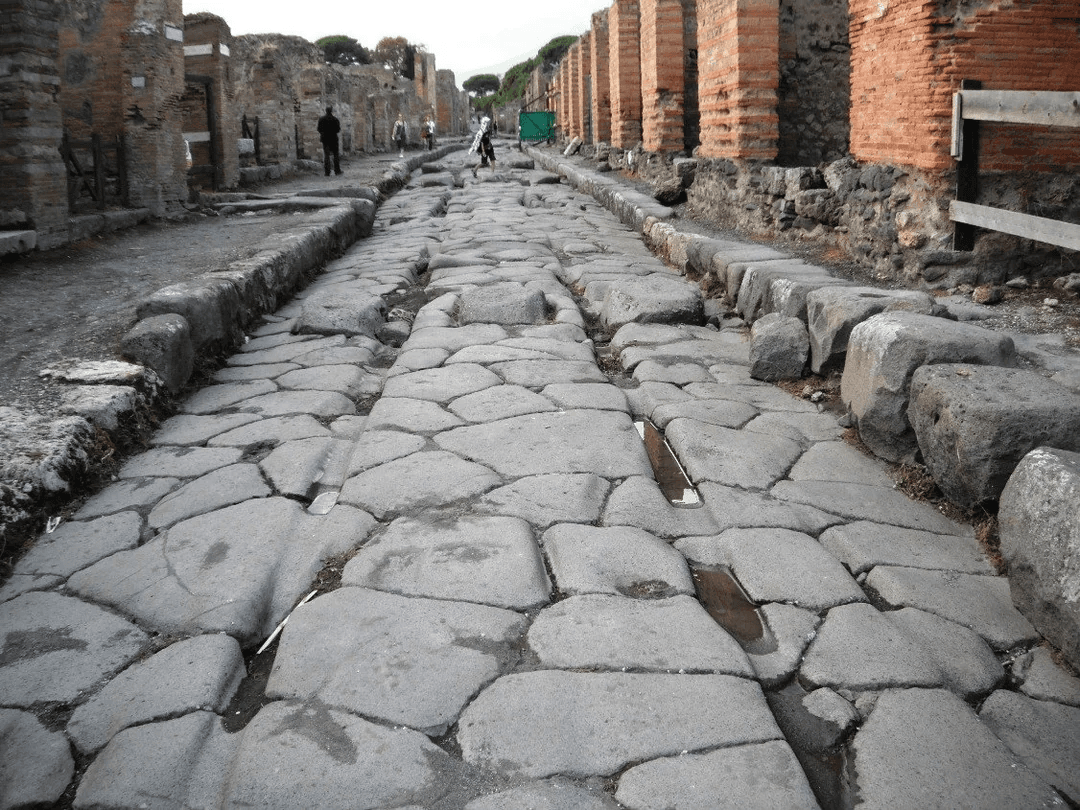
A roman road
You've probably heard this story before. Maybe a friend shared it, or you saw it in a chain email, or it popped up on social media. It goes something like this:

Modern railroad tracks are 4 feet, 8.5 inches wide because that's the width Roman war chariots used two thousand years ago. Those chariots carved ruts into Roman roads across Europe, which influenced the width of wagon wheels for centuries afterward. When English coal miners built the first tramways, they followed these traditional wheel widths. And when George Stephenson built the first modern railways, he simply copied the tramway gauge. The story often ends with a dramatic flourish: even NASA's Space Shuttle solid rocket boosters were constrained by this ancient Roman standard, because they had to fit through railroad tunnels on their way from the factory.
It's a compelling narrative about how the distant past shapes our present in unexpected ways. There's just one problem: it's not true.
The Roman Roads Problem
Eric Poehler, a leading authority on Roman roads and traffic systems, tackles this exact myth in his 2017 book The Traffic Systems of Pompeii. He points out that the story relies on a logical leap across nearly two millennia with no evidence that any measurement system from antiquity continued into the modern era.
The myth assumes we're still using Roman road surfaces today. While it's true that some modern roads follow routes established by the Romans, we're not driving on ancient pavement. In some places, Roman roads lie buried beneath modern surfaces; in others, modern roads run near but not on the exact Roman route. Roman roads were impressively durable, but the idea that their wheel ruts would constrain vehicle design two thousand years later "defies any logic and has no supporting evidence," as Poehler notes.
But there's an even bigger problem: Roman vehicles weren't standardized in the way the myth suggests.
The Standardization That Never Was
Poehler examined actual wheel ruts preserved in Pompeii's streets and found they measured 10-15 centimeters wide - enough to accommodate many different vehicle gauges, not a single rigid standard. The myth claims that wagons had to match existing ruts "or run the risk of destroying their wagon wheels," but the archaeological evidence tells a different story.
The vehicles preserved by the eruption of Mount Vesuvius in 79 AD show considerable variation in size and wheel spacing. There was no single "Roman standard" that everyone had to follow. As Poehler explains, the persistence of this myth owes much to "its trivial nature; no one ever has reason to check."
What Actually Happened with Railroads
The real history of railroad gauge is messier than the myth, but far more interesting.
When railroads began in both Britain and the United States, there wasn't a single standard gauge - there were several. The 4 feet, 8.5 inches that eventually became standard wasn't chosen because of ancient Rome. It emerged from the practical world of early 19th-century mining railways in Northeast England, where George Stephenson worked.
Early horse-drawn mining railways used various gauges depending on local conditions and preferences. There was no universal standard inherited from the past. When Stephenson built his successful railways in the 1820s and 1830s, he used the gauge common in his region. Other railway builders adopted it not because it was historically ordained, but because compatibility with existing successful lines made practical sense.
The Gauge Wars
Britain's railway boom in the 1830s and 1840s actually featured fierce debates over which gauge was best. The famous engineer Isambard Kingdom Brunel built his Great Western Railway with a 7-foot gauge, arguing it would be faster and more stable. He had good technical reasons for this choice.
Parliamentary committees investigated the matter, and in 1846, Britain mandated that new railways use the 4'8.5" gauge - not because it was the best engineering solution, but because it was already the most common and changing would be expensive and disruptive.
The United States went through similar chaos. While standard gauge became dominant, much of the southern rail network used 5-foot gauge. Some cities even had their own local gauges, like the "Pennsylvania Trolley Gauge" of 5'2.5" still used in parts of Philadelphia and Pittsburgh's transit systems. The South's broader gauge was only converted to standard gauge in the 1880s, after the Civil War had damaged much of the network and the benefits of a unified system became undeniable.
The Space Shuttle Connection
The myth often culminates with the claim that Space Shuttle solid rocket boosters were constrained by railroad gauge, and thus by ancient Roman chariots. This is wrong on multiple levels.
Railroad "loading gauge" - how tall and wide cargo can be - is largely independent of track gauge. It's determined by the clearance of bridges, tunnels, and overhead wires, and it varies considerably even on tracks of the same gauge. A London Underground train and an American double-stack freight train share the same track gauge but have vastly different loading gauges.
The Space Shuttle's solid rocket boosters, at over 12 feet in diameter, were far larger than standard railroad loading gauges. They were shipped as special oversize freight, which requires careful planning but is routine in rail transport. Aircraft components, large industrial equipment, and other oversized cargo travel by rail all the time using special procedures - they're not constrained by some ancient chariot width.
Why We Believe the Myth
So why does this story persist? Poehler suggests it's precisely because the claim seems trivial - it's the kind of fun fact people share without checking. It also appeals to our sense that history works in neat, linear ways, with ancient decisions echoing through the centuries.
The reality is more complex and more human. Railroad gauge became standardized through engineering practice, economic pressure, political decisions, and what economists call "path dependence" - once you start down a particular path, switching becomes increasingly difficult and expensive.
There's no invisible hand of ancient Rome guiding modern engineering. Just people making decisions based on the circumstances they faced, sometimes brilliant and sometimes arbitrary, that later generations inherited and had to work around.
And that, in its own way, is just as fascinating as the myth.
Sources:
Poehler, Eric. 2017. The Traffic Systems of Pompeii. Oxford University Press.