
From Desert Hospital to Healthcare Giant: The Unlikely Origins of Kaiser Permanente
When you think of major healthcare innovations, you probably don't picture a dusty construction site in the Mojave Desert during the Great Depression. But that's exactly where one of America's largest healthcare systems was born—not in a boardroom, but out of desperation, necessity, and one young doctor's radical idea.
A Broke Doctor in the Desert
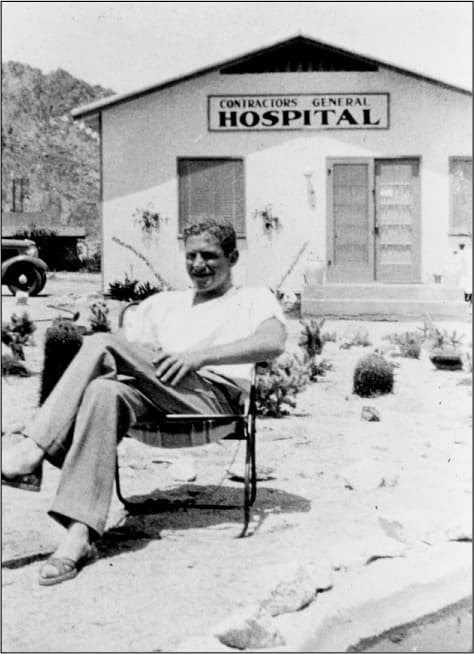
Dr. Garfield at Contractors General Hospital kept aqueduct crews healthy in the Mojave Desert, laying the groundwork for Kaiser Permanente.
In 1933, fresh out of his hospital residency in Los Angeles, Dr. Sidney Garfield learned about the Colorado River Aqueduct project—a massive undertaking to bring water from the Colorado River to Los Angeles that would require about 5,000 workers in a remote Southern California desert.
Garfield borrowed money and opened a modest 6-bed facility called Contractors General Hospital—at the time, the only air-conditioned building between Los Angeles and Phoenix. He hired a nurse, Elizabeth "Betty" Runyen, and set up shop.
There was just one problem: the hospital was going broke.
Garfield started with a traditional fee-for-service model, but insurance companies were painfully slow to pay his patients' bills. Worse, many workers had no insurance at all, and Garfield—committed to treating everyone who needed care—was often working for free.
The Five-Cent Solution
Enter Harold Hatch, an insurance agent who would accidentally help revolutionize American healthcare.
Hatch suggested something unorthodox: what if insurance companies paid Garfield a fixed amount upfront based on the number of covered workers, rather than reimbursing him after the fact? The agreement was structured as a "prepayment" to the hospital—a nickel a day per worker.
The results were immediate. With predictable funding, Garfield could keep the hospital running. But he noticed something even more interesting: when payment was guaranteed upfront, he realized he would make more money by improving workers' health and preventing accidents rather than just treating injuries after they happened.
This insight—that prevention pays—would become the philosophical foundation of Kaiser Permanente.
Garfield expanded the concept, offering complete medical care for workers and their families for an additional nickel a day paid by the workers themselves. For just ten cents a day—about $2.20 in today's money—workers got comprehensive healthcare. The program was a massive success.
From Dams to War
When the aqueduct project ended, Garfield prepared to return to private practice. But Henry J. Kaiser, the legendary industrialist, had other plans.
Kaiser was overseeing construction of the Grand Coulee Dam in Washington and needed healthcare for 6,500 workers. He convinced Garfield to replicate his prepaid model there, expanding it to include workers' families. Once again, the model flourished.
Then came December 7, 1941, and everything changed.
The Wartime Explosion
When America entered World War II, thousands of diverse workers migrated to Henry Kaiser's shipyards in Richmond, California; Portland, Oregon; and Vancouver, Washington. Kaiser was building Liberty ships at unprecedented speed, but he had a problem.
Many shipyard workers didn't pass military health requirements and arrived with little or no previous healthcare. They were getting sick, and production was suffering.
Kaiser called on Garfield once more. Together, they created the Permanente Health Plan for all of Kaiser's wartime facilities—shipyards and steel mills alike. In 1943, they opened a 50-bed hospital for 3,000 employees and their families at the Kaiser Steel Mill in Fontana, California, offering prepaid healthcare for 60 cents per week for adults and 30 cents for children.
By August 1944, an astounding 92.2% of Richmond shipyard employees had voluntarily joined Kaiser Permanente—the first group health plan in the country to feature group medical practice and prepayment on such a massive scale.
The Gamble That Changed Everything
When World War II ended, membership plummeted. By July 1945, 50,000 workers had left the Northern California yards. Membership bottomed out at 17,000.
Most people assumed the program would shut down. It had been created for wartime industry; with the war over, surely it would fade away like so many other emergency measures.
But Kaiser and Garfield saw something different: a vision for healthcare in America built on prepayment, group practice, and a focus on keeping people healthy rather than just treating them when they got sick.
On July 21, 1945, they opened the Permanente Health Plan to the general public. The program was nicknamed "a Mayo Clinic for the common man" by writers of the era.
Within six months, membership surged back to 26,000 as Garfield aggressively marketed the plan. By the first ten years, enrollment surpassed 300,000 people, thanks in large part to support from labor unions like the International Longshore and Warehouse Union and the Retail Clerks Union.
The Legacy
Today, Kaiser Permanente serves over 8 million members across eight states. That scrappy desert hospital that almost went bankrupt in 1933 became the blueprint for integrated healthcare in America—and the pioneering example of what we now call value-based care.
The lessons from Dr. Garfield's Mojave experiment remain at the heart of Kaiser Permanente's model:
- Prepayment over fee-for-service creates incentives for prevention
- Group practice allows for coordinated, comprehensive care
- Keeping people healthy is better (and cheaper) than treating them when they're sick
What began as a young doctor's desperate attempt to keep his hospital solvent during the Depression became one of the most influential healthcare models in American history. Sometimes the most transformative innovations don't come from grand strategic planning—they come from practical people solving immediate problems in creative ways.
And sometimes, all it takes is a nickel a day.
Interesting links:
Introduction to value based care